
Food Rationing in Britain in World War II

Life in Britain was anything but easy during World War II! One thing that made life challenging was rationing.
Great Britain, as an island nation with a large population, has always relied on imports for food and other supplies. Those imports were threatened when Germany conquered western Europe in mid-1940, removing major trade partners—and as German U-boats and surface vessels sank cargo vessels bound for England from the rest of the world.
The first thing rationed in Britain was petrol (gasoline), as of September 22, 1939. Later, paper, clothes, shoes, linens, and even soap were rationed.
Food Rationing in Britain
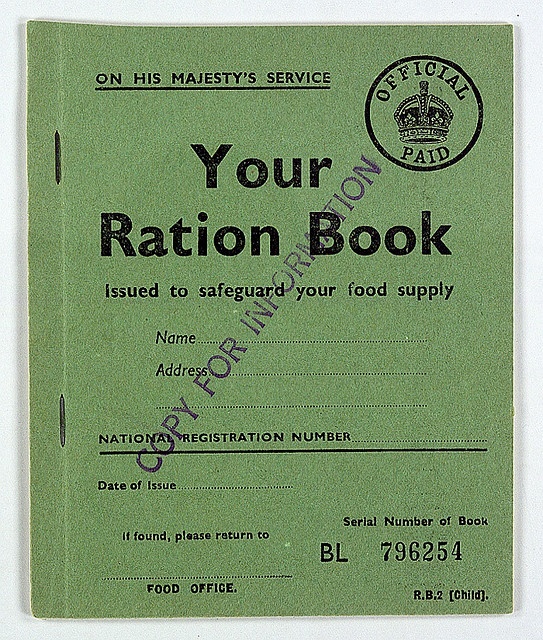
British ration book for a child, WWII (National Archives UK)
Food rationing started in Britain on January 8, 1940. Each person received a ration book with coupons to be torn out by the grocer. The allowed amounts of all the foods mentioned below fluctuated during the war based on supply.
The first foods rationed in January 1940 were bacon and ham (4 oz per week), butter (4 oz per week), and sugar (12 oz per week). On March 11, 1940, meat was added, with each person over the age of six allotted 1 shilling/10 pence worth per week (about 1 pound), with 11 pence worth for children under six. Chicken, game, fish, sausage, and offal were not rationed.

British poster, 1940 (Imperial War Museum)
Tea—that most British of staples—was added to the list on July 8, 1940 (2 oz per week)—as well as margarine (6 oz per week) and fats (2 oz per week).
To deal with continuing sugar shortages, cakes were not allowed to be iced (frosted) as of August 5, 1940. Jam, marmalade, syrup, and treacle (molasses) were rationed as of March 17, 1941 (8 oz per month), and sweets and chocolates on July 26, 1942 (8 oz per 4 weeks).
Cheese was added to rationing on May 5, 1941 (1 oz per week), and milk and eggs were allocated starting May 28, 1941. Since eggs were so scarce, most people didn’t receive their allocated one egg per week. When US Lend-Lease supplies began arriving in Britain, people began receiving a tin of skim milk powder each month (December 1941) and a tin of dried eggs every two months (June 1942).
The Ministry of Food introduced a point system on December 1, 1941. At first this applied to canned meat, fish, and beans, but later included rice, canned fruit, cereals, and biscuits (cookies).
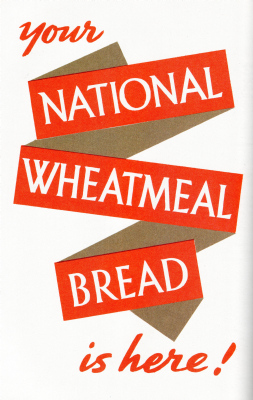
British ad for National Wheatmeal Loaf, WWII
Bread was never rationed during the war, but the sale of white bread was banned and an unpopular National Wheatmeal Loaf of wheat and potato flour was sold instead.
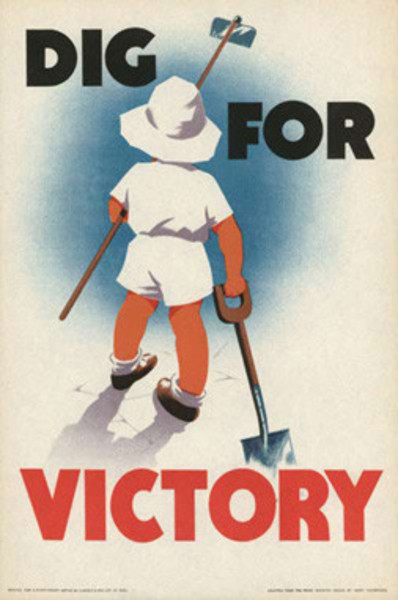
British Dig for Victory poster, promoting home gardening, WWII
Fruits and vegetables were never rationed, but most were scarce, including onions, tomatoes, and oranges—onions were even used as raffle prizes! Lemons and bananas were completely unavailable. To supplement their rations, people were encouraged to plant “Dig for Victory” gardens and to raise chickens and pigs.
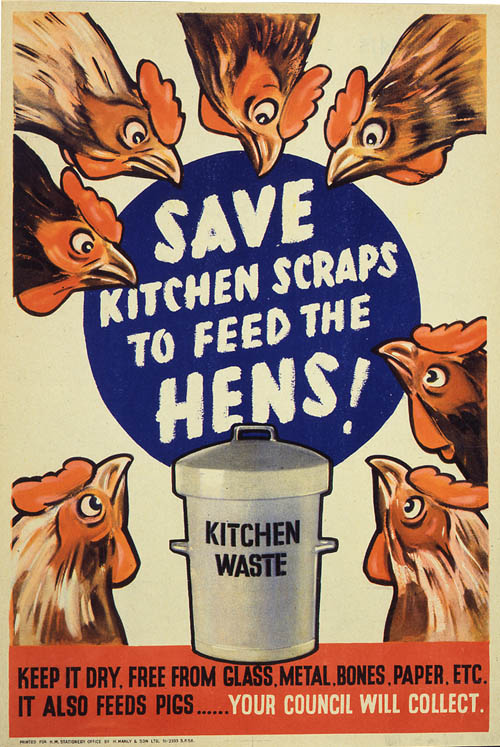
British poster, WWII
Because potatoes and carrots were unrationed and plentiful, the government promoted their use, and they appear in most wartime recipes, substituting for other foodstuffs.
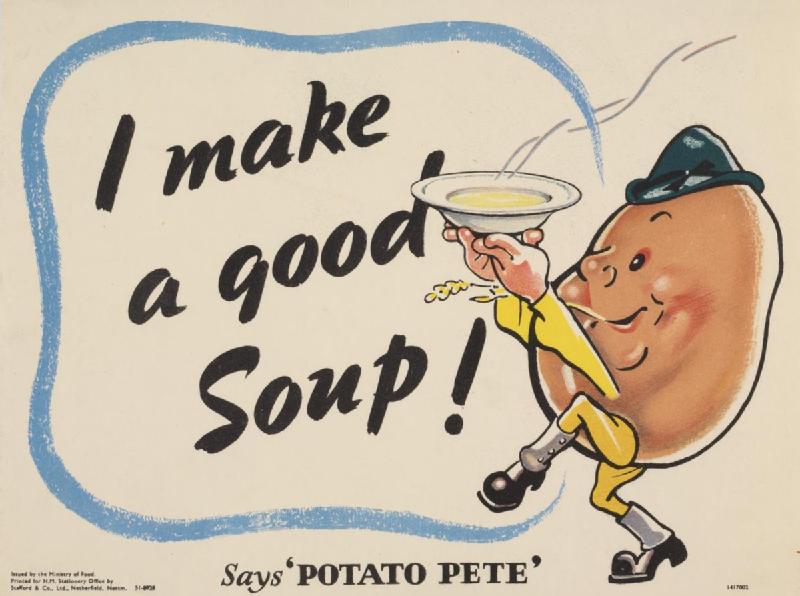
“Potato Pete” poster, British, WWII (Imperial War Museum)
Overall, the rationing system in Britain provided a bland and meager diet, but it ensured that everyone had enough to eat and promoted a “we’re all in this together” mentality.
Which part of food rationing would have been most difficult for you?

Your historical WW II novels are terrific and make me feel like I was a part of the war effort!
Thank you so much, Kimberly!
Hi Sarah, I am already a subscriber to your newsletter. Thank you for the chance.
Thank you, Alicia!
Thanks for the opportunity to win a paperback copy of Embers in the London Sky. I would like to share the story with a friend. I read an ebook copy and loved it. Your post was very interesting. Have a blessed day.
Thank you, Julie!
This is so fascinating! I knew rationing happened but the actual details are really interesting. Not sure what I’d miss most. Probably fruit and veggies 🙂 Thanks for sharing!
It’s fascinating! And it would have been very difficult.
I believe I am already a subscriber.
Thanks, Colleen! If you received an email from me today, you’re a subscriber 🙂
I enjoy your books so much! Am already a newsletter subscriber.
Thank you so much, Betsy!
I’m new to your books, but love them! Thanks for all the investigating you put into them to make them accurate!
Thank you, Jenn! I’m glad you’re enjoying the stories!
Sarah, I’ve very much loved how atmospheric your most recent novels have been. I felt like I was right in the middle of France and Denmark. I can hardly wait to read my copy of Embers to be transported to Netherlands and London. I just need a break in my editing and writing schedules so I can truly enjoy the virtual trip!
Any hints at what might be coming up next for you?
Thank you, Andrea! I’m glad you’re enjoying the stories! The next book is set in the far north of Scotland in WWII – and it involves a double agent and a naval officer 🙂
Hello Sarah, I am already a subscriber, but wanted to let you know I have read all of your novels and loved everyone of them!
Thank you so much, Sharon!
I’m not too familiar with rationing during the war, so I found it very interesting. I love your books, so that shouldn’t surprise me!
Thanks, Perrianne! I’m glad you enjoyed the post!
Sarah, I love Scotland! Sean Connery won me over to that at the impressionable age of five (that accent!). Definitely looking forward to the new book. Thanks for sharing!
I absolutely love your books!! Can’t wait to read your newest one!
Thank you, Marybeth!
I haven’t read your books before, but I want to
Thank you, Kera! I hope you enjoy them!
Love your books. I’m absolutely hooked on clean WWII novels, especially those based on true events/people.
Thank you, Anne-Marie! I’m so glad you’re enjoying them.
Already a subscriber.
Thank you, Sonnetta!
I think the no eggs would have been the hardest
It would be difficult!
This post was fascinating! It would have been so difficult to give up so much especially if you lived in the city. I think sugar would be the hardest to give up!
That would have been the hardest thing for me as well!
I was watching Foyle’s War a mystery set during WWII and an onion was offered as the raffle prize
I love Foyle’s War! We just binge-watched it for the second time. And that scene is based on real events 🙂 Onions were indeed raffled off!
I don’t need to win a copy of “Embers…” I got mine as soon as it came out. 🙂 I enjoy all of your books so much. Thank you!
Thank you so much, Gabrielle!
I enjoy historical fiction and look forward to reading your work.
Thank you, Denise!
Thanks for being part of the scavenger hunt, Sarah. I think I’d enjoy reading your books.
Thank you, Mary!
Nice giveaway, thank you!
Big fan of history!
Happy Saint Patrick’s Day to all 🍀